|
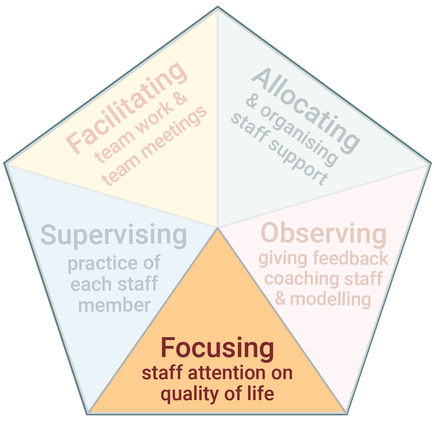
The first task of Practice Leadership is focusing staff attention on quality of life.
It is about ensuring the primary focus of the service and staff is on the quality of life of the people you support. |
What is quality of life?
Quality of life is an important idea about what it means to live a good life. Disability services and staff aim to improve the quality of life of people with intellectual disabilities.
This video introduces quality of life and explains why it is important.
A closer look at quality of life will help to break down this broad and abstract idea.
In intellectual disability services, quality of life comprises 8 domains. These domains are shown in the diagram.
Quality of Life Domains
|
Interpersonal Relations
Relationships with family, friends, acquaintances and paid staff. |
Emotional
Well-being Feel safe, secure and content. |
Personal Development
Learn and develop skills. |
Physical
Well-being Healthy lifestyle and access acute and preventative health care. |
|
Self Determination
Exercise choice and autonomy on a day-to-day basis. |
Social Inclusion
Be present and participate in communities of choice. |
Rights
Treated with dignity and respect as a citizen of equal value. |
Material
Well-being Personal possessions and a reasonable standard of living. |
Notice how there are descriptions for each domain – these can guide your thinking about quality of life. For each person you support, you can ask:
" How good is their quality of life?
How well is the service supporting their quality of life? "
Some of the indicators you might look for in each domain are listed below.
How well is the service supporting their quality of life? "
Some of the indicators you might look for in each domain are listed below.
Quality of Life Indicators
|
Interpersonal Relations
Individuals… • experience positive and respectful interactions. • are supported to have regular positive contact with their family. • know people other than paid staff and family. |
Emotional
Well-being Individuals… • appear content with their environment, activities and staff support. • appear happy and take part relatively willingly in a range of activities with the right support. • are at ease with staff presence and support. |
Personal Development
Individuals are supported to… • engage in meaningful activities and social interactions in various areas of their life. • try new things, experience success, and develop their skills. • be competent and develop confidence and self-esteem. |
Physical
Well-being Individuals are supported to… • have a good diet and regular exercise. • have access to regular health checks appropriate to age. • have pain or illnesses recognised and responded to. |
|
Self Determination
Individuals are supported… • to express preferences and make choices about their lives. • by someone who knows them well and can help others to understand their preferences. • to understand information through appropriate communication. |
Social Inclusion
Individuals are supported to… • use local community facilities. • take part in activities with people with and without disabilities. • have a valued role, to be known or accepted in their communities. |
Rights
Individuals... • are treated with dignity and respect in all interactions. • have someone who advocates for their needs and interests. • have access to transport and community facilities. |
Material
Well-being Individuals... • have their own possessions around their home. • are supported to manage their finances. • have access to sufficient funds to make purchases of their choosing. |
Applying a quality of life framework helps you to focus on each individual and what is important to them. In turn, it helps you to identify how support can be delivered so that each individual experiences good quality of life.
Keep in mind when you think about quality of life:
Some services focus on particular quality of life domains whereas others focus broadly across all domains. For example, a community access service may have greater influence on social inclusion, interpersonal relations, and domains specific to the aims of each individual. An employment service may have greater influence on the domains of personal development, material well-being and social inclusion. Group homes are likely to focus on and influence each of the domains.
You can read more about quality of life in the Resources.
Keep in mind when you think about quality of life:
- All 8 domains apply to everyone
- What a good quality of life looks like is different for each individual
- You need to know a person well to really understand what a good quality of life looks like for them
- The life of each person is constantly changing. Their preferences, interests and priorities change. You need to continually adapt how you think about and support a person’s quality of life
Some services focus on particular quality of life domains whereas others focus broadly across all domains. For example, a community access service may have greater influence on social inclusion, interpersonal relations, and domains specific to the aims of each individual. An employment service may have greater influence on the domains of personal development, material well-being and social inclusion. Group homes are likely to focus on and influence each of the domains.
You can read more about quality of life in the Resources.
Individual quality of life
Quality of life is individual. What one person prefers and considers to be a good life will be different from another person.
Michael with Andrew discuss Michael’s quality of life.
Gerard discusses what brings meaning to his life.

|
Activity 1 |
- What did Michael identify as important to his quality of life?
- What did Gerard identify as important to his quality of life?
- Use the 8 domains of quality of life and think about a person you support: What would the person identify as important to their quality of life?
- Think about the service and supports this person receives: In what ways do they contribute to the person’s quality of life?
- In what ways could the service and support be improved so the person experiences better quality of life?
Staff support, engagement and quality of life
Staff support is a key influence on the quality of life of people with intellectual disabilities. We know from research into Active Support that when staff provide good support, people with intellectual disabilities experience greater engagement in meaningful activities and social interactions.
It is through engaging in meaningful activities and social interactions that we experience quality of life. To have friends, be physically fit, or participate in social or even solitary activities, we have to be engaged.
It is through engaging in meaningful activities and social interactions that we experience quality of life. To have friends, be physically fit, or participate in social or even solitary activities, we have to be engaged.
|
Frontline Practice Leaders must help staff to understand that the support they provide makes a real difference to a person’s quality of life. |
You may need to explain to staff what quality of life is, and that the purpose of the service and their role is to enhance the quality of life of each person they support.
For some staff, understanding this may be a challenge because they have other ideas about the purpose of the service and their role. Or they may underestimate a person’s potential to be engaged or experience good quality of life.
The next video illustrates how Practice Leaders can help staff to understand the purpose of their role and see a person’s potential.

|
Activity 2 |
- How did the support worker (Sophie) see the purpose of her role?
- How did the Practice Leader help the support worker to think about Maree’s quality of life?
To help staff understand a person’s potential to be engaged in meaningful activities and social relationships, Frontline Practice Leaders can:
- explain to staff what engagement looks like for the person
- help staff to recognise opportunities for engagement
- demonstrate to staff how to support a person to engage in an activity or social interactions
Summary
A task of Frontline Practice Leadership is to give clear and strong messages to staff about the aspects of their work that are most important and should take priority. Enhancing quality of life must be the priority. The other four tasks of Practice Leadership aim to keep staff focused on quality of life.
In the next module, we look at how to do this by allocating and organising staff support.
In the next module, we look at how to do this by allocating and organising staff support.